


Happie Quiz: Play Earn Rewards
4.125.00 Reviews
App Specs
- Version
- 2.8.1
- Updated On
- License
- Free
- Downloads
- 100,000+
- Developer
- Happie Rewards
- Categories
- Trivia
- Platform
- Android
Screenshots
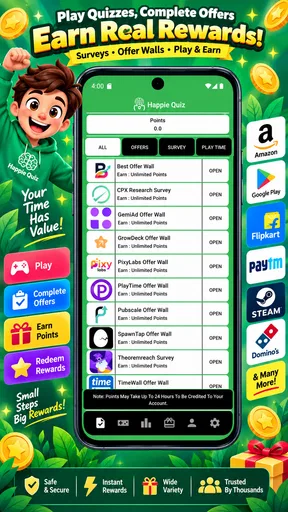
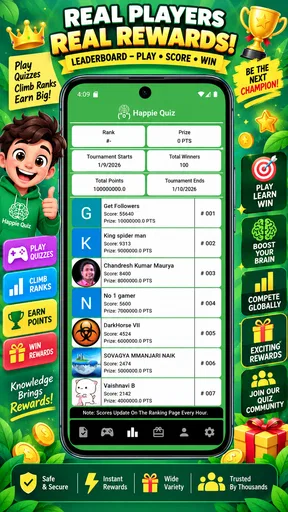
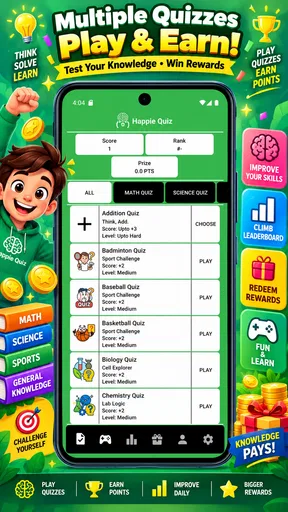
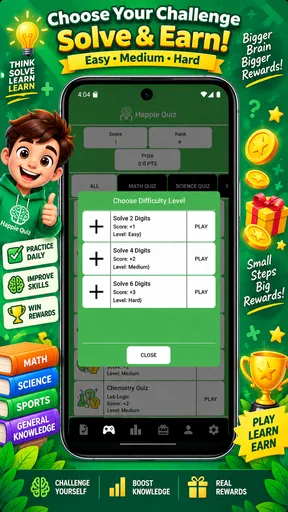
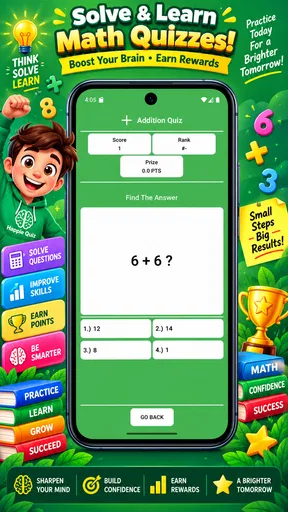
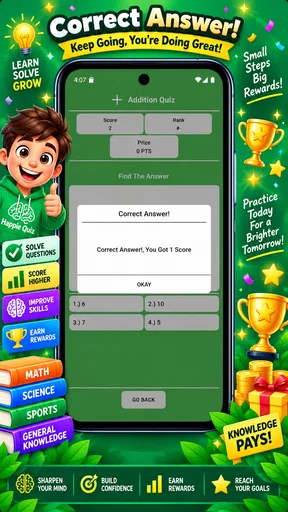
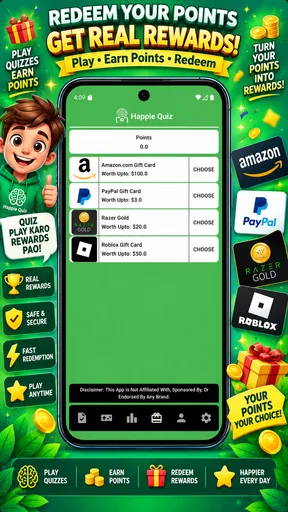
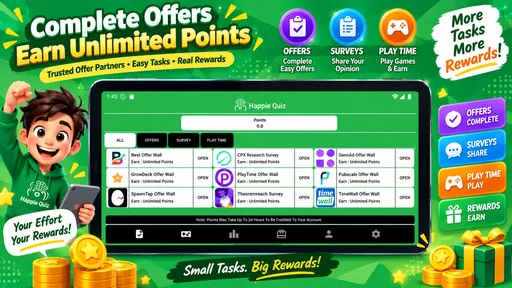
 Analysis by AppCompare
I approached Happie Quiz: Play Earn Rewards as a short-session trivia game rather than as a full study tool, and that distinction matters. The basic appeal is easy to understand: answer quiz questions, sharpen general knowledge, collect rewards, and challenge friends when you want a little competition. In practice, I found the most interesting part was not the promise of rewards by itself, but the way that promise changes the rhythm of play. A question that might feel casual in an ordinary quiz becomes part of a small personal goal.
The game comes from Happie Rewards and is free to play. It sits in the trivia category, with a mature 17+ content rating, so I would not treat it as a family quiz for younger children. Its audience is more likely to be adults who enjoy general-knowledge questions and want something lighter than a traditional learning app. The current version is 2.8.1, and it supports devices running Android 7.0 or later.
What I like most is that the game does not need a long uninterrupted session to make sense. I can imagine opening it while waiting for an appointment, playing through a few questions, and leaving without feeling that I have abandoned a complicated campaign. At the same time, the rewards angle gives me a reason to return instead of treating each round as a one-off distraction. The best way to view Happie Quiz is as a repeatable quiz habit, not a guaranteed shortcut to earning money.
How the early goals shape the first sessions
The first useful goal is simply to build a rhythm: read carefully, answer with confidence, and learn how the game presents its questions. That sounds modest, but it is important for a trivia title. If the opening experience is overloaded with rules, currencies, or complicated menus, a player can lose interest before discovering whether the questions are enjoyable. Happie Quiz works better when I treat the first sessions as a test of fit. Do I like the subject mix? Do I enjoy competing with friends? Does the reward motivation make the questions feel more meaningful?
The store summary places three ideas together: playing quiz games, improving general knowledge, and earning rewards. Those goals do not always pull in the same direction. Learning encourages careful reflection, while reward-focused play can encourage speed and repetition. I found that the game is most satisfying when I use the reward objective as a reason to start, but let curiosity decide how long I continue. If every answer becomes only a step toward an external benefit, mistakes feel more frustrating and the quiz loses some of its educational value.
For a new player, I would set a small personal target instead of trying to maximize everything immediately. For example, I might play one brief session and note which subjects cause the most hesitation. On the next visit, I would slow down on those questions rather than rushing to preserve a perfect-looking run. This turns the game into a simple feedback loop: attempt, notice a weakness, and return with a better approach. That is more useful than blindly tapping through questions for a long period.
The friend-competition element also gives the opening a social goal. A player who normally ignores solo trivia may be more interested when the result can become a friendly challenge. I would recommend agreeing on a relaxed standard with friends, because competitive quiz play can become irritating when everyone treats every round as a serious test. The social layer works best when it adds conversation and motivation rather than pressure.
Worth Reading Before You Choose

EA SPORTS FC Mobile 26 Is a Bigger Football Game, but It Takes Time

Flipboard Shows What News Apps Must Do Beyond the Feed

Switching to Android Auto Means Rethinking Your Driving Routine

Google Calendar Makes a Crowded Week Easier to Manage

Ludo King Makes the Most of the Minutes Between Plans

Baby Panda World Brings Quick Play to Modern Phones, but Its Game Library Feels Busy
One practical question is whether the game is suitable for someone who wants structured education. In my view, only partly. It can support general-knowledge practice, especially when I pay attention to questions I miss, but it should not replace a course, reference book, or dedicated study app. The questions are the activity; the player has to create the deeper learning habit. I would use it as a warm-up, a revision break, or a way to discover topics worth studying elsewhere.
Turning mistakes into a useful routine
A small change in how I play makes a noticeable difference. Instead of remembering only the score, I mentally sort mistakes into three groups: facts I genuinely did not know, questions I misread, and answers I changed at the last second. Each group needs a different response. Unknown facts call for later reading, misread questions call for slower pacing, and second-guessing calls for better confidence management. This simple classification is one of the more valuable ways to get learning value from a reward-driven quiz.
It also helps prevent a common trap: assuming that a high result always means strong knowledge. Trivia performance can depend on familiarity, wording, speed, and luck. I would judge progress over several sessions rather than one memorable round. That approach makes the game less emotionally dependent on individual wins and losses, which is especially helpful for players who dislike competitive scoring.
Progress signals, rewards, and the feeling of moving forward
Happie Quiz has a clear reason to keep playing because rewards are part of its identity, but that does not automatically make progression satisfying. In a good quiz game, I want several signals that tell me I am improving: more confident answers, fewer repeated mistakes, better results against friends, or a stronger sense of control over the question flow. The reward system can support that feeling, but it should not be the only signal I watch.
I would pay attention to whether the game encourages thoughtful improvement or merely repeated attempts. If I can identify why I performed better, the progress feels earned. If a better result seems to come only from replaying until the right questions appear, the experience becomes more mechanical. That is the main trade-off I see in this type of app: repetition can build familiarity, but too much repetition can make the quiz feel like a task.
The rewards also deserve a realistic mindset. The game is free, and its central attraction includes earning rewards, but I would not install it expecting a dependable income stream. Reward-based apps are better understood as entertainment with an incentive attached. The time I spend answering questions should already feel worthwhile before I think about what a reward might become. If the quiz itself is not enjoyable, the reward promise will probably not compensate for the repetition.
This is also where I would consider the difference between progress and accumulation. Accumulating rewards may feel visible, but learning is often slower and less obvious. A player can improve by recognizing question patterns, reading more carefully, or expanding general knowledge, even when the reward total does not change in a satisfying way. I prefer to keep both measures separate: rewards tell me what the app is giving back, while accuracy and understanding tell me what I am gaining as a player.
For someone wondering how much time to invest, I would use short, repeatable sessions. A brief visit keeps the game from becoming a chore and makes it easier to notice whether the challenge remains enjoyable. Longer sessions can be tempting when competition or rewards are involved, but fatigue affects trivia performance. Once I start answering through guesswork, I am no longer getting much educational value, and the reward motivation can turn into pressure to continue.
What the public reception suggests
The game has an average rating of 4.1 from around 871 ratings, with more than twenty written reviews and over 100K installs. Those figures suggest that it has reached a meaningful audience and that many players find the overall idea appealing. I would still avoid reading the rating as a promise that every player will enjoy the same experience. Trivia preferences vary widely, and reward expectations can be especially personal.
For me, the more useful interpretation is that Happie Quiz has enough visibility to be worth trying, while still being a game I would evaluate on its actual question quality and pacing. A popular download count does not tell me whether the subject balance matches my interests, and a solid average rating does not remove the need to check the mature age classification. The numbers provide context, but the day-to-day feel matters more.
Difficulty curve and the difference between challenge and friction
A trivia game needs questions that are approachable enough to invite another round but difficult enough to make correct answers feel meaningful. The ideal curve is not simply easy at the beginning and hard later. It should also create variety. If every question is obvious, I stop learning. If too many questions depend on obscure details, I start feeling that the result reflects guessing rather than knowledge.
My preferred way to handle the difficulty is to treat uncertainty as part of the game rather than as a failure. When I know two possible answers, I read the wording again and look for what the question is actually asking. That habit is useful in any quiz, but it matters especially in a reward-oriented format where rushing can feel attractive. The fastest answer is not always the best answer, and a slower, accurate session is more satisfying than a frantic one.
The game is likely to suit people who enjoy broad general knowledge more than specialists who want a deep examination of one subject. That is an important distinction. Someone who wants detailed language drills, formal science revision, or a carefully sequenced history curriculum may be better served by a dedicated educational app. Happie Quiz makes more sense for the player who enjoys moving between subjects and being surprised by what appears next.
Difficulty also changes with personal background. A question that is effortless for one player can be unfamiliar to another, so I would not use a single poor session as evidence that the game is unfair. Instead, I would look for patterns across multiple rounds. If I consistently struggle with a topic, that gives me a clear choice: accept it as a weak area, study it separately, or decide that the quiz is not aimed at my interests.
There is a subtle trade-off between friend competition and personal learning here. Playing against someone with a very different knowledge base can make results entertaining but not especially informative. If I want a fair test of improvement, I would compare my own performance over time. If I want excitement, I would challenge friends and accept that the outcome may depend on subject luck. Keeping those two purposes separate makes the game feel less frustrating.
When the pacing works, and when it does not
The short-session structure is a strength for people with fragmented free time. I can fit a quiz into a commute break, a waiting room, or the few minutes before starting another task. The same pacing can feel limited for players looking for a substantial game night with a story, character development, or a large strategic system. There is no reason to expect those deeper elements from a trivia app, but it is worth being clear about the type of entertainment on offer.
I also would not recommend playing while distracted. Trivia depends on reading precision, and a player who is switching between messages, conversations, and questions may blame the difficulty for mistakes caused by attention. A better routine is to play fewer questions with full focus. That approach protects the learning side of the experience and makes any result more meaningful.
Retention pressure and the right way to manage it
Rewards and competition naturally create reasons to return, but they can also create pressure. I notice the risk when the thought changes from “I want to play” to “I have to play so I do not fall behind.” That is the point where a casual trivia game can begin to feel like an obligation. I would set a personal stopping rule, such as ending the session after attention drops or after I begin guessing repeatedly.
This is particularly relevant for adults who are sensitive to reward loops. The mature 17+ rating is a reminder that the game is not positioned as a children’s title, and I would keep the same caution around younger users even if they enjoy trivia. Parents should make their own decision based on the age classification and the way their child responds to reward-focused play. I would not hand it to a child simply because the activity involves general knowledge.
Another useful boundary is to separate entertainment time from expectations about earnings. I would never spend money, skip important work, or extend a session solely because I believe more play must produce a meaningful financial result. The free entry point makes experimentation easy, but free does not mean costless if the player gives the app too much time. The real resource being managed is attention.
Competition can produce a similar effect. Friendly challenges are motivating when they encourage a rematch, but they become unhealthy when every mistake feels embarrassing. I prefer to share unusual questions and funny wrong answers with friends rather than focusing only on who finished first. That keeps the social side connected to the quiz itself instead of turning it into a narrow scoreboard.
For players who want a calmer experience, I would use the app as an occasional knowledge break. For players who enjoy goals and repeated attempts, the reward structure may provide enough momentum for more regular use. The important distinction is whether the return habit remains voluntary. If the app starts dictating the day, I would reduce session length or move back to a non-rewarded trivia alternative.
Who should choose it, and who should skip it
I would recommend Happie Quiz to adults who enjoy general-knowledge quizzes, like the idea of competing with friends, and appreciate a free way to turn idle minutes into a small challenge. It is also a reasonable choice for someone who wants a light supplement to learning. The combination of questions, personal improvement, and rewards gives the game more purpose than a completely disposable time-killer.
I would be more cautious recommending it to someone seeking guaranteed earnings, a formal study plan, or a deep single-subject curriculum. It is not the right replacement for a serious learning platform. I would also steer away from it if reward mechanics tend to make you play longer than intended. In that case, a traditional offline quiz book or a non-rewarded trivia app may be a healthier fit, even if it offers less immediate motivation.
People who dislike uncertainty may also find the format less satisfying. Trivia results can vary because of topic familiarity and question wording, and competition does not always measure broad intelligence. If you need a clearly structured progression system with transparent lessons and predictable milestones, a dedicated educational product will probably serve you better.
My progression verdict after weighing the whole loop
The progression in Happie Quiz works best when I define it personally. The game supplies a reason to answer questions and return, while I supply the meaningful targets: fewer careless mistakes, stronger recall, better reading discipline, or more enjoyable matches with friends. That division is important because rewards alone cannot guarantee lasting engagement. They can start the loop, but improvement and variety have to keep it interesting.
I see the strongest use case as a compact daily or occasional quiz habit. A player can open it with a modest goal, focus on the questions, review the mistakes mentally, and stop before the activity becomes tiring. The game is less convincing when treated as a serious earning strategy or as a complete educational system. Its value sits in the middle: casual trivia with an incentive layer and a social reason to return.
The free price makes trying it straightforward, and the existing audience gives it enough credibility to deserve a fair test. Still, I would check the mature age classification before recommending it to anyone younger, and I would keep expectations about rewards grounded. The current version, 2.8.1, is the version I would evaluate when deciding whether the experience feels polished enough for my routine.
My final opinion is positive but measured. Happie Quiz can turn spare minutes into a more purposeful activity, especially when I use it to notice knowledge gaps rather than chase a result blindly. Its biggest strength is the simple loop of question, decision, feedback, and another reason to try. Its main weakness is that the same loop can become repetitive or pressuring if rewards and competition take over. If you want light trivia with a motivational extra, it is worth trying; if you want dependable income or structured education, choose a more specialized alternative.
Pros
- Quick quiz rounds make it easy to play during short breaks.
- Wide range of trivia topics keeps the experience varied.
- Reward progress can add extra motivation to regular players.
- Simple interface is approachable for casual users.
- Lightweight gameplay generally requires little time or commitment.
Cons
- Rewards may require substantial time or points before redemption.
- Some quizzes can feel repetitive after extended play sessions.
- Earnings and available rewards may vary by region or account.
- An internet connection may be needed for quizzes and reward tracking.
- Ads can interrupt gameplay and make longer sessions less enjoyable.
FAQs for Happie Quiz: Play Earn Rewards
What is Happie Quiz: Play Earn Rewards?
Happie Quiz: Play Earn Rewards is a trivia-style mobile app that lets users answer quiz questions across different topics while collecting in-app points or rewards. The experience is designed around short, casual sessions, making it suitable for playing during spare time. Available quizzes, reward types, and earning opportunities may vary depending on your location, account status, and the current version of the app.
How do you earn rewards in Happie Quiz?
Rewards are generally earned by completing quizzes, answering questions, and participating in activities offered inside the application. The amount of points you receive can depend on your accuracy, quiz type, promotions, and any daily limits. Before spending significant time in the app, check the rewards section carefully to understand the minimum redemption threshold, available options, expiration rules, and whether additional verification is required.
Can Happie Quiz rewards be converted into real money or gift cards?
The available redemption methods depend on the country, platform, and current reward program. Some users may see options such as gift cards, digital payments, or other benefits, while others may have fewer choices. Rewards should not be considered guaranteed income. Always review the app’s withdrawal instructions, processing times, eligibility requirements, and any restrictions before assuming that accumulated points can be exchanged for cash.
Is Happie Quiz: Play Earn Rewards free to download and use?
The app may be available to download without an upfront purchase, but free access does not necessarily mean that every feature is completely free. It may include advertisements, optional promotional activities, or other engagement features. Your mobile data usage can also vary depending on video ads and content loading. Check the official store listing and the in-app terms for information about purchases, advertising, permissions, and possible regional limitations.
Is Happie Quiz safe and worth downloading?
Happie Quiz can be an entertaining option for users who enjoy answering trivia questions and collecting small rewards, but expectations should remain realistic. Before registering, review the permissions requested, privacy policy, account requirements, and reward conditions. Avoid sharing unnecessary personal or payment information, and download only from an official app store. Whether it is worthwhile depends on the quiz quality, reward availability, redemption reliability, and the amount of advertising you are comfortable with.


